
Optical &
magneto-optical
CD, DVD, Blu-ray, MO, MiniDisc, WORM and UDO share optical components but differ radically in physical format, recording layer, sectors, sessions, filesystems and compatible drives.
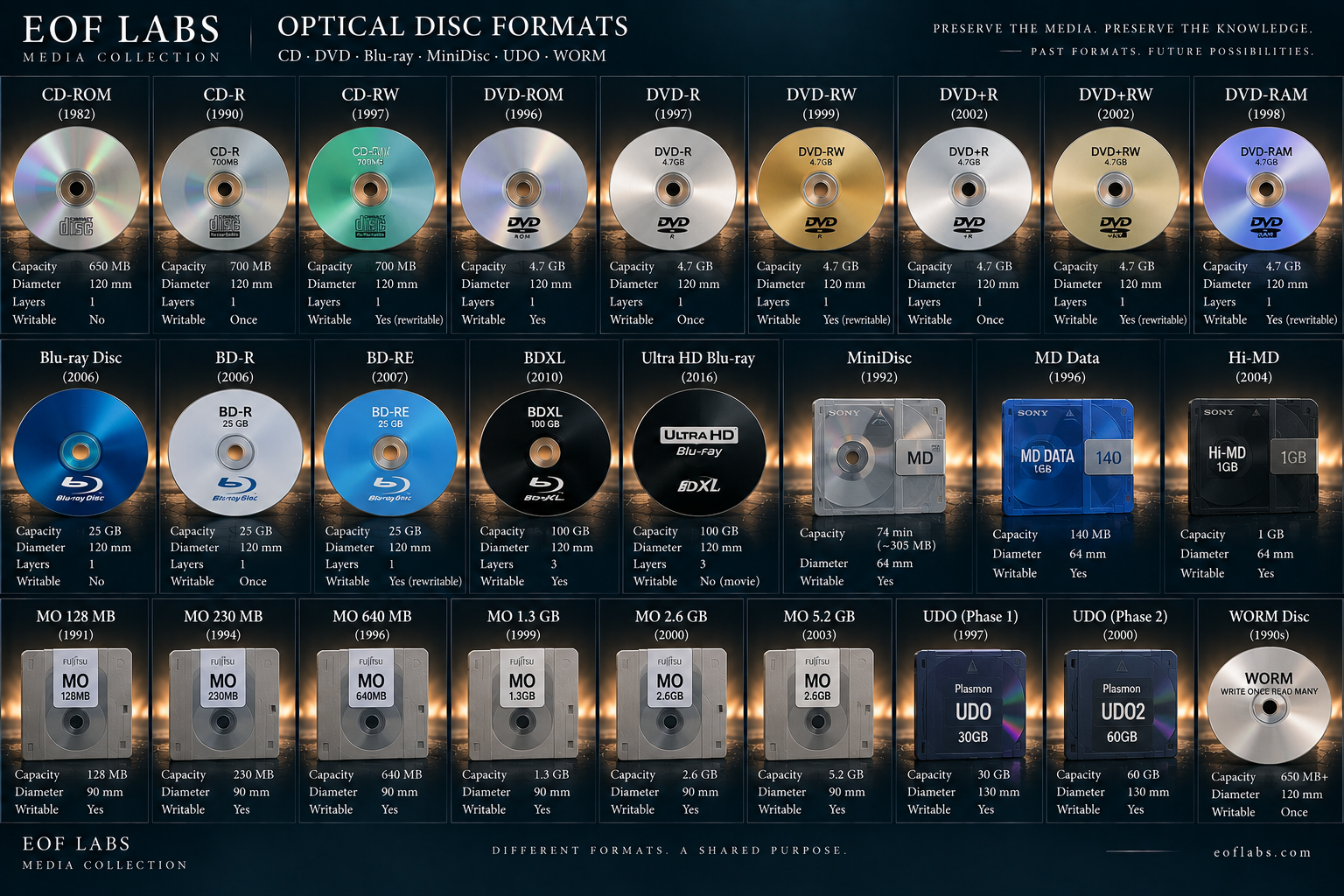
Similar discs can encode very different archives
| Family | Representative media | Primary technical anchor | Preservation issue |
|---|---|---|---|
| Compact Disc | CD-ROM, CD-R, CD-RW | ECMA-130 for CD-ROM physical/logical recording | Tracks, sessions, sector modes, audio/data and filesystem views. |
| DVD | DVD-ROM, -R/+R, -RW/+RW, DVD-RAM | ECMA-267 for read-only DVD; format-specific standards for recordable branches | Book type, layers, sessions and UDF/ISO bridge structures. |
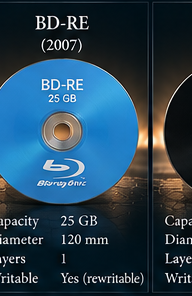
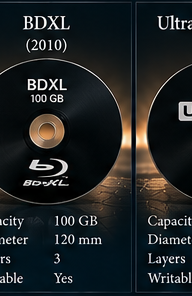
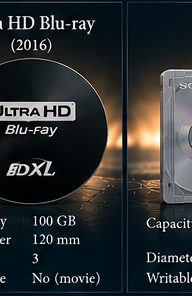
| Blu-ray | BD-ROM, BD-R, BD-RE | Blu-ray Disc Association public specification index | Full Book specifications are licensing-controlled; avoid reproducing inaccessible details as if public. |
| Magneto-optical | 90 mm and 130 mm MO | ECMA-154 / 184 / later capacity standards | Drive generation, sector size and cartridge compatibility. |
| MiniDisc | Audio MD, MD Data, Hi-MD | Sony model-specific documentation | Audio/data branches and transfer software differ; do not infer Hi-MD behaviour from audio MD. |
| UDO / institutional WORM | UDO RW and WORM | ECMA-380 for generation 2 | Jukebox/application metadata and specialist drives. |
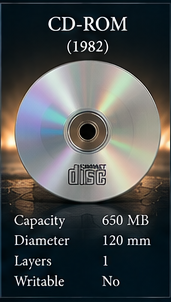
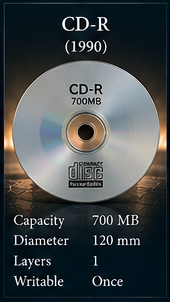
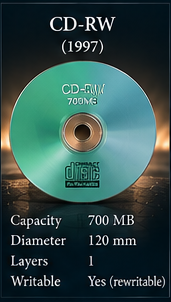
The standard describes more than a filesystem
ECMA-130 specifies the 120 mm read-only optical disk's mechanical, physical and recorded characteristics, including track format, coding and error-correction structure. That is distinct from ISO 9660 and its extensions, which describe how files and directories are represented.
A CD can contain multiple tracks and sessions. Mixed-mode discs can combine computer data and audio. CD-R multisession recording means a file-level copy of the currently mounted view can omit earlier sessions. ISO 9660 can coexist with Rock Ridge, Joliet or Macintosh HFS/hybrid views, so preservation should capture the track/session structure required by the source.
Physical format and volume format are separate standards
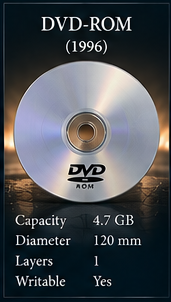
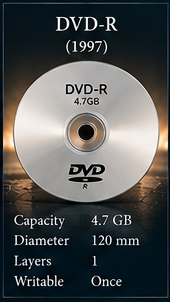
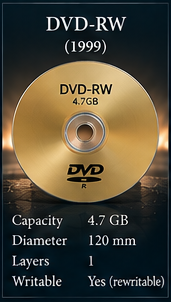
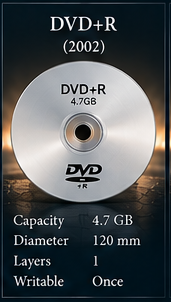
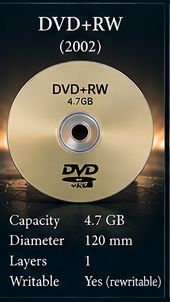
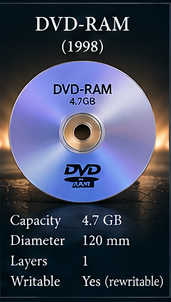
ECMA-267 specifies 120 mm DVD read-only media. Recordable and rewritable DVD branches add their own physical recording rules. UDF and ISO/UDF bridge structures then sit above those physical formats. DVD-RAM is especially important to distinguish because it behaves much more like rewritable random-access block storage than sequentially authored DVD-Video media.
Public documentation has a licensing boundary
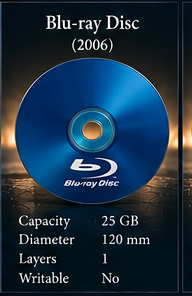
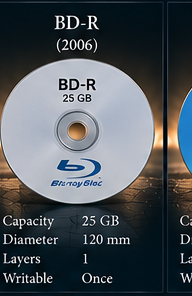
The Blu-ray Disc Association publishes a public index of BD-ROM, BD-R and BD-RE specification families, but the full Format Specification Books are controlled through licensing arrangements. EOF Labs should therefore cite public BDA material and drive-manufacturer documentation for public claims and explicitly mark details that cannot be verified from publicly accessible specifications rather than filling gaps from unsourced summaries.
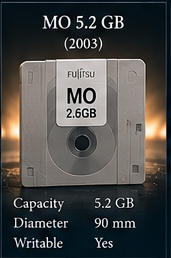
Optical addressing, magnetic state
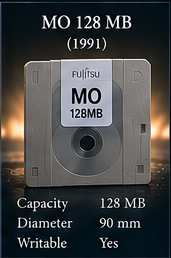
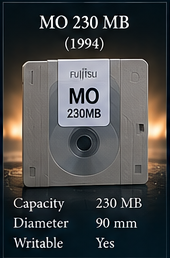
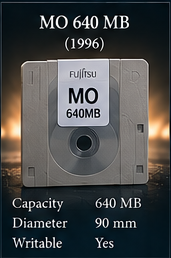
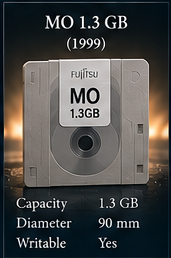
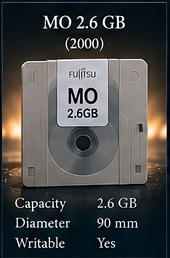
Magneto-optical media uses laser heating together with magnetic-field control to change recorded domains, while optical effects are used during readback. ECMA standards cover several important cartridge generations. ECMA-154 covers 90 mm rewritable MO; ECMA-184 covers 130 mm 1.3 GB-class media and explicitly includes rewritable, partial-ROM, optical-ROM and write-once implementations; ECMA-322 extends the 130 mm family to 9.1 GB-class media.
| Standard | Physical family | Why it matters |
|---|---|---|
| ECMA-154 | 90 mm MO | Primary standards anchor for 3.5-inch-class magneto-optical cartridges. |
| ECMA-184 | 130 mm, 1.3 GB class | Defines multiple implementation types, including rewritable and write-once forms. |
| ECMA-322 | 130 mm, 9.1 GB class | Documents a later high-capacity MO generation. |
MO is normally exposed as random-access block storage once a compatible drive is available. Sector size and drive generation can matter to host support. Preserve a whole-device image before repairing partitions or filesystems.
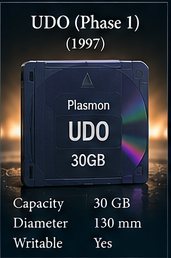
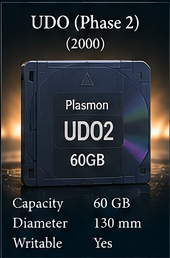

Second-generation UDO is an open standards opportunity
ECMA-380 specifies second-generation Ultra Density Optical cartridges at 60 GB nominal capacity, 30 GB per side, and covers both rewritable and WORM forms. This is unusually useful for archival documentation because the physical and recorded format is publicly accessible through a standards body rather than only through vendor marketing literature.
UDO often lived inside Plasmon-style jukebox and document-management environments. The cartridge can therefore be physically readable while the relationships between objects, patient records, document IDs or retention sets remain in an external application database.
ECMA-167 / UDF belongs above the medium
ECMA-167 defines volume and file structures for write-once and rewritable media and underpins the UDF ecosystem. Treat this as a logical layer rather than a property of “DVD” or “Blu-ray” itself. The same physical family can contain different volume formats, and a mounted desktop view can hide sessions or alternate representations.
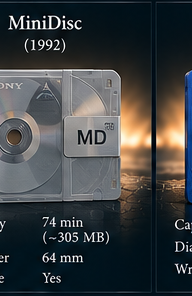
Audio MD, MD Data and Hi-MD need separate source trees
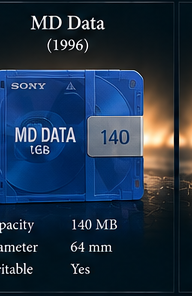
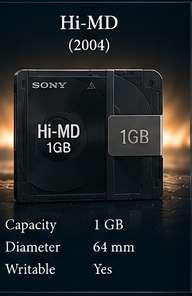
MiniDisc began as an audio format. MD Data introduced computer-oriented uses, while Hi-MD later increased capacity and added USB-connected workflows. These should not be collapsed into a single capacity or filesystem table without model-specific Sony documentation. Audio content may depend on ATRAC generation, recorder behaviour and transfer restrictions rather than presenting itself as ordinary files.
“Disc rot” is not one diagnosis
Pressed media, organic-dye recordable discs, rewritable phase-change media and magneto-optical cartridges have different recording layers and ageing mechanisms. Scratches, delamination, oxidation, dye degradation, poor original burns, contamination and drive calibration can all produce read errors. Compare behaviour across known-good compatible drives where appropriate before assigning failure to the recording layer.
Preserve below the visible filesystem
Identify the physical media type and recording variant; select a compatible drive; inspect condition; acquire at the level appropriate to the format — block image for MO and disk-like media, track/session-aware image for optical discs when needed; retain error information and original structure; then interpret ISO 9660, HFS, UDF or application-specific data from the copy.
Open standards and controlled specifications
[ECMA-130] ECMA International, Data Interchange on Read-only 120 mm Optical Data Disks (CD-ROM). Official standard ↗
[ECMA-267] ECMA International, 120 mm DVD Read-Only Disk. Official standard ↗
[ECMA-154] ECMA International, 90 mm magneto-optical disk standard. Official standard ↗
[ECMA-184] ECMA International, 130 mm 1.3 GB magneto-optical cartridge standard. Official standard ↗
[ECMA-322] ECMA International, 130 mm 9.1 GB magneto-optical cartridge standard. Official standard ↗
[ECMA-380] ECMA International, 130 mm 60 GB UDO generation 2 standard. Official standard ↗
[ECMA-167] ECMA International, Volume and File Structure for Write-Once and Rewritable Media. Official standard ↗
[BDA] Blu-ray Disc Association, Format Specifications. Public specification index ↗